Thursday, May 27, 2010

Kibuye Market

I've been to Kibuye market a couple of times while I've been in Kisumu. It's one of the largest markets in Kenya and also in Africa. You can buy pretty much anything (food, furniture, clothes, DVDs) with most of the clothing being second hand - shirts, pants, shoes, and even underwear. I thought it was funny that most of these clothes we donated and thought were given away for free are actually being sold in these kinds of markets. And so I often see people wearing clothes that they have no idea what they mean (ie: I saw one of our patients wearing a Hooters shirt, also a random person walking down the street with a "Girls gone wild film crew" T-shirt, some kid with a Chuck-E-Cheese shirt)

 
customers browsing the selection of used shoes

It's pretty crowded in the Kibuye market

They also sell spices, beans, produce, and poultry at the market

Who's that 'Chinese' guy wandering around the market?

 taking pictures in black & white: instant way to turn any photo into art

 a shot of the indoor market in Kibuye.
On a side note: I love the natural lighting in Africa; every picture looks ultra dramatic like it's out of a magazine


video walking through kibuye market


There's hardly any other mzungus at the market so it's important to be wary of your belongings because a lot of people will be after them - either by ripping you off or more blatantly, by pickpocketting you. I didn't buy much at the market but I did get a sweet pair of masai sandals (which were custom made according to my design and size specifications) and also a belt since I didn't bring one to Africa

 workers making a pair of masai sandals from old tires. They live on a couple of dollars a day

this guy is working on the custom sandals that I ordered

the final product

glad to finally have a belt to hold my pants up!

Tuesday, May 18, 2010

The countdown

I can't believe that I am in Kenya for only 2 more weeks. I remember when I first came here, all the days went by so slowly and even as I told others that everything was great, I was wondering how I'd get through 8 weeks. After the first 2 weeks here, the next 4 weeks really just flew by. To anyone who's wondering (maybe no one), I also finally bought my return flight home - I'll be back in the US on July 9th, flying into JFK from Tel Aviv, Israel. Then ill be leaving Jul 15 to go to South Korea and Singapore.

Some of you who I talked to before coming to Kenya knew that I had a dilemma around when to go to Kenya. I had tickets to a Hillsong concert in Boston and considered leaving about 8/9 days later, and also considered potentially delaying another 3 days to go to Columbia Med School's revisit weekend. In my mind, I was rationalizing, "how much of a difference does 1 week even make?" Nonetheless, even after trying to come up with excuses to go to the Hillsong concert (ie: it's ok since it's a christian concert right?), I felt really strongly about leaving early and almost saw this as a test of my commitment - if I couldn't even sacrifice this concert, how serious was I in coming here?

During my first week here, I remember regretting not going to the concert, thinking that coming about 9 days later would not really have been a big deal. I actually wondered why I felt so strongly about coming early in the first place. But then the volcano in Iceland exploded, grounding a large number of flights to and around Europe (my flight, as with most that go to Nairobi from NYC, connected in London), meaning that the I would not have just been delayed 8/9 days by going to the concert, but potentially, for twice that amount of time or more. This would all have been time spent away from Kenya, missing out on learning and seeing new things, and meeting people. Everything happens for a reason.

Anyway, this week I'm working at a hospital, shadowing a doctor who is a retired medschool professor from UCSD. I'm excited to get some clinical exposure and at an academic level, to see the kind of things I wouldn't necessarily see in the states: diseases that are rare in the US, cases progressing to a level that they would not have allowed to get to, treatments and solutions using the kind of resourceful necessitated by a lack of supplies.

Yesterday I was able to join a group of nursing students from the US who are here for less than a week and hike up a short distance up the mountain in the rain (it rains here almost every day since it's the rainy season). We went up to deliver some clothes and toys to a family living there. This group of people brought multiple luggage cases full of clothes, shoes, toys, etc from the US. (Which btw they could have all purchased IN Kenya - no doubt, they imagined Kenya as this desolate place with people living in huts)

Anyway, once we arrived at the home, they took all the gifts out and began distributing them to the family and then taking pictures of members of the family holding the donations. All this happened quite frantically (maybe due to the rain) and I couldn't help but feel a little sick at the spectacle this family had become - like we were exchanging these toys/shoes/clothes, in exchange for photos to show to friends in the US. One of the girls grabbed the youngest child and took a photo - the obligatory picture holding an African baby which will no doubt end up being her facebook profile picture.

I also felt a little sick realizing I had done these exact things, in a similar kind of way (sans facebook profile pic) during my first few weeks here. Actually, I still sort of do it but hopefully in a more sensitive/respectful way - I guess it's really a balance of wanting to show people at home what you're seeing but also respecting the families that you're supposed to be helping. Obviously, I, having been here for a full 6 weeks felt so much more sensitive to this balance than these 5 day "tourists".

This experience reminded me of something my pastor was talked about a few months ago. In New York City, people who have been living in the city their entire life (born and raised) get annoyed by the "fake" NYCers who live and work here, who in turn get annoyed by those who have recently moved here to find a place for themselves, who in turn get annoyed at tourists and people from NJ crowding up the streets. We're always trying to one-up each other, comparing ourselves to another in trite measures and finding significance in insignificant differences (really, are you more of a New Yorker if you've lived in NYC for 5 yrs vs. 3 years?). And like the Remand Center where the kids will fight over every little thing - an extra colored pencil, another piece of paper, cutting in line to get their pencil sharped first - we will continue to fight for every scarce resource, no matter how trite it may be. In the end, we're all fighting to be the skinniest kid in fat camp.

And really, I wonder how trite all these things we fight for, care about, compare ourselves against with others must seem to the Truth. When you take the limit to infinity, the difference between any 2 things will seem infinitisimal. Part of the amazing thing about grace is the realization that we all never deserved it in the first place and that none of us earned it - even if you lived a 6% more moral life than your neighbor.
Sent from my Verizon Wireless BlackBerry

Tuesday, May 11, 2010

From the day we arrive on the planet

I thought I would put up some pictures from my safari to Masai Mara. It was a pretty amazing trip with gorgeous views, meeting a lot of interesting new people, and of course getting to witness the "Circle of Life" firsthand. As corny as it sounds, I had the Lion King soundtrack running on my ipod which provided the perfect auditory backdrop to the beautiful visuals.

video of the tent we stayed in. I was pretty happy about the fact that we had western style toilets and a shower

picture of the African plains

we saw many elephants on our trips, including a lot of baby ones!

wasted potential - fastest but also laziest animals ever

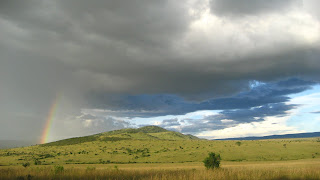
one of my favorite pictures on the trip - we were lucky to see a rainbow after the rain

You can view more of the pictures of the Masai Mara trip by going to my Flickr Album here: http://www.flickr.com/photos/50102930@N06/sets/72157623919696649/

Feeding children in Africa

This past weekend, I went up to Nyahera again to help teach the bible lesson but this time we also had the opportunity to provide a nice warmed cooked meal (with meat!) for the children. By rural Kenyan standards, the meal that we were serving - complete with beef stew, potatoes, cabbages, rice, and a dessert of fresh pineapple - was a pretty extravagant feast considering that most of these children would most likely just eat beans, porridge, or nothing at all.


preparing the stoves for cooking


cutting up the veggies

After cooking the food, the children lined up so that we could serve them cafeteria style. I was in charge of the cabbages which actually really reminded a lot of kimchee which I miss a LOT since there are no korean restaurants in Kisumu. I can just imagine BCD tofu house right now ... with the steaming hot beef soon dooboo and fried fish ..mmm


some of the children beginning to form a line (sadly, they will probably experience K-town or the deliciousness of BCD tofu house)

As expected, one by one, the children happily took their overflowing bowls of food back to the classroom to eat. That is, until one of the girls refused to take one of the bowls that was given to her - it turns out that she didn't like cabbage or any other veggies for that matter! Clearly, a harsh punishment was in order.


that's what you get for not eating your veggies!

Just kidding, that was just a video of cutting the meat before putting it in the pot. Anyway, I thought it was funny/ironic that in the United States, in reponse to picky eaters, parents often tell their children something along the lines of, "you should be happy for the food that you have - there are starving children in Africa!" I guess the kids in America can now respond to their parents that even some of those children in Africa would not want to eat their veggies.

the children eating their food in the classroom

Evans, 4 yrs old, is one of the youngest kids


these boys still need to learn how to use a spoon

After all the children and volunteers had finished eating, in true American fashion, we had lots of leftovers (this was because a group of the kids did not show up due to family/personal issues that weekend). I'm not really sure what happened to the leftovers - whether someone took them home or they had to be thrown out - but it reminded me of a conversation I had the previous week during our safari.

Michael was telling us that at his college, a Kenyan who had been recruited as a runner cried the first time he saw the school dining hall. Like many colleges, the meals were served buffet style and was simply overflowing with such a variety of food and cuisines in quantities that the Kenyan had never seen before. I interpreted the weeping to mean that he was so overcome with joy at the an unending abundance of deliciousness, a confirmation that America was truly the land of plenty, and that he had finally "made it" by coming to the United States and being able to eat like a king.

The Kenyan tourguide who was with us however, suggested that maybe he was crying because he knew how much food was going to be hrown out, and wasted - especially in light of the kind of conditions he knew his family, friends, and countrymen faced. In reponse, the German nurse who was with us on the safari said that in a world of roughly 6 billion people, humans produce enough food to feed roughly 12 billion people. However, much of that surplus is thrown away/destroyed to protect the price of the food.
Now, I don't know if those numbers are right or what she said about protecting the price of food is the main incentive for all the waste or inequity - I would suspect that poor distribution networks/infrastructure/lack of good storage facilities/good old fashioned corruption/etc would also contribute a great deal to food not reaching people - but it doesn't seem like much of a stretch to consider how a lot of today's world shortage problem might not be so much a matter of growing enough food, but rather getting the food to the people who need them. To be honest, I don't really know that much about this topic or have any real solutions, but doing a pretty quick google search led me to this article which I thought was interesting.